Opal Stands

How to Choose the Right Opal Stand for Your Jewellery Collection
A display stand has one job: to make jewellery look better than it does lying flat in a box. That sounds straightforward until a delicate chain goes on a stand built for a chunky pendant, or a wide signet ring meets a slot too narrow to hold it. The piece slides, the chain kinks and the arrangement looks untidy. Choosing well comes down to four things — size, height, colour and material. Get those right and the rest tends to fall into place.
Start With the Pieces You're Displaying
Rings, necklaces and earrings each ask something different of a stand, so it helps to look at them separately before you look at anything else.
Rings
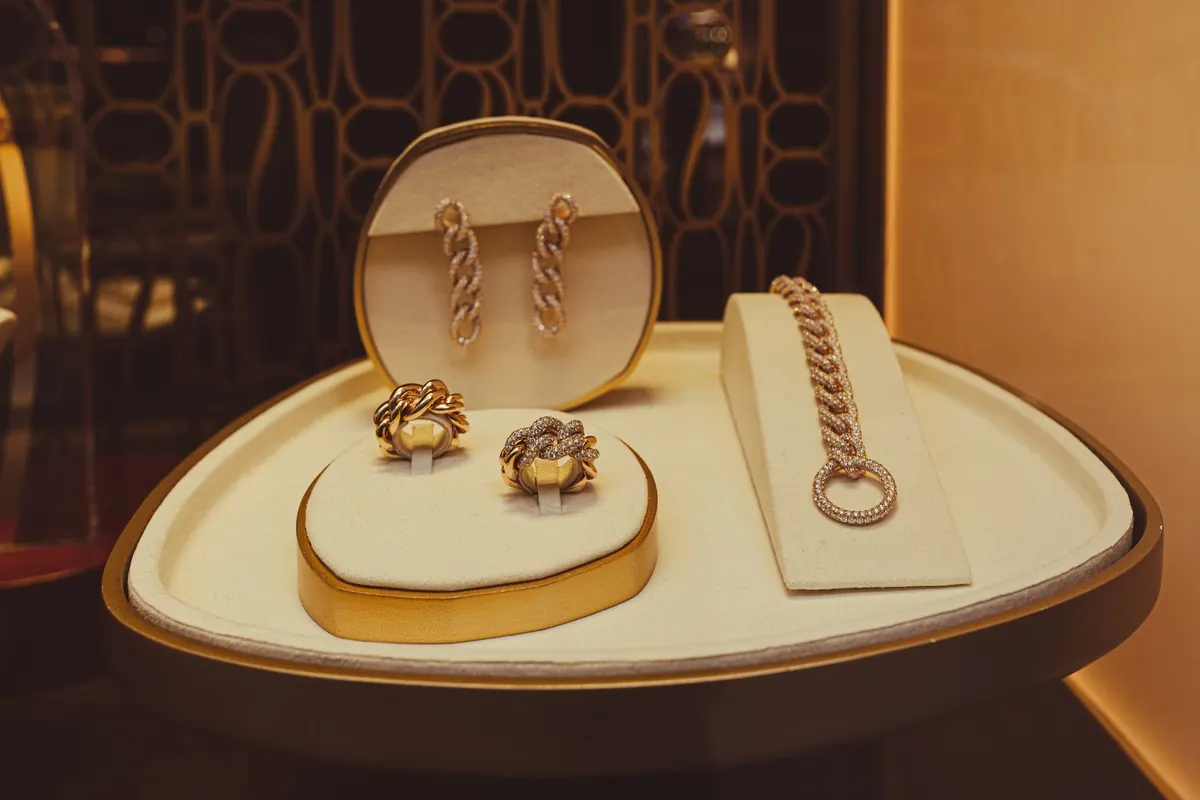
Most ring stands use a slot or a tapered cone. A cone is more forgiving, because it suits a range of band sizes without looking loose. A slot is neater, but the fit matters: a wide band in a shallow slot will tip forward, and a fine band in a deep slot disappears. If you sell a lot of stacking rings, a longer cone lets you show three or four together as a set rather than as separate pieces.
Necklaces
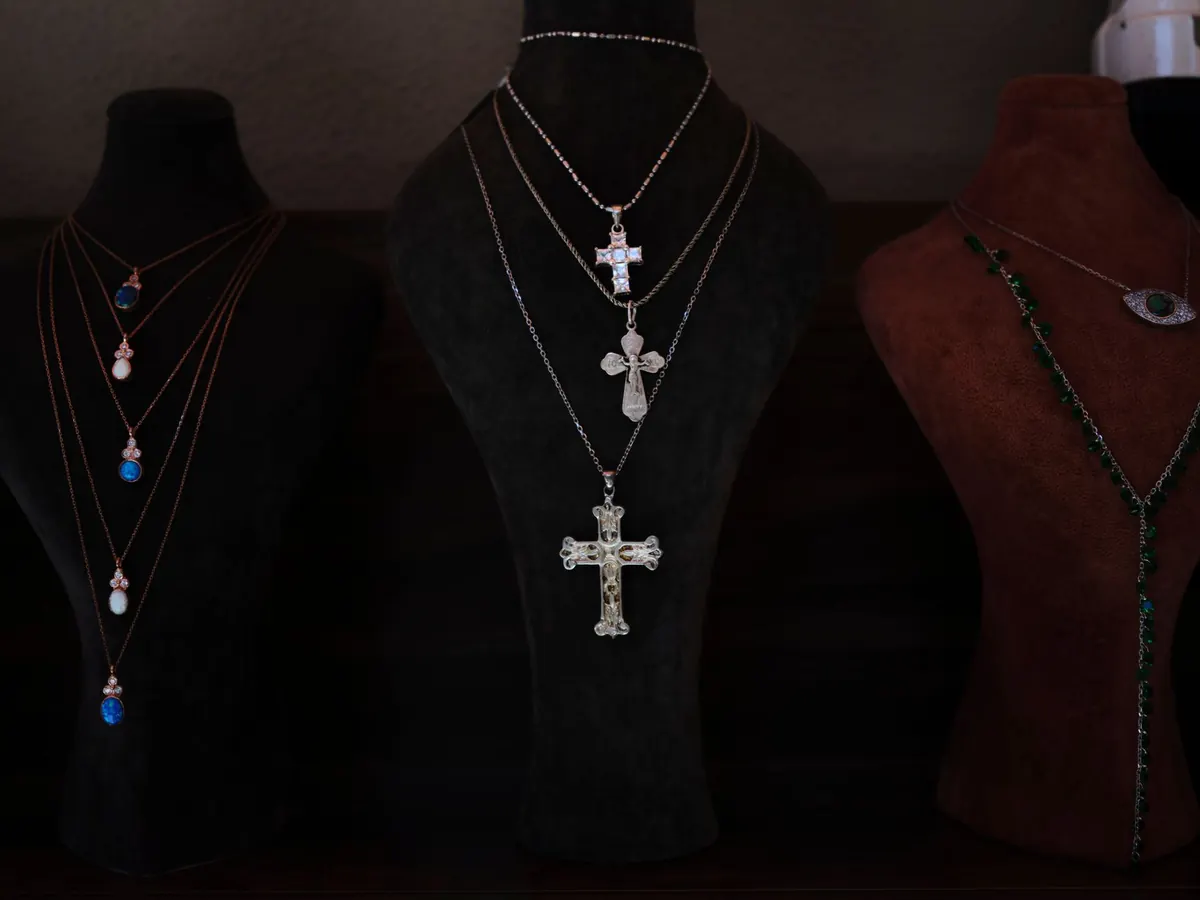
On a necklace bust, width matters more than height. Look for shoulders roughly as wide as the necklace sits when worn; a bust that is too wide flattens the drape, and one that is too narrow drops the chain straight down. A pendant needs enough height to hang clear of the base. If the pendant rests on the stand, you have lost the shape of the piece.
Earrings
Hook earrings need a T-bar or a bar with drilled holes. Check the thickness: a bar that is too thick slowly stretches hooks out of shape, and one that is too thin lets them swing and cross. Studs sit better on a flat pad or a slotted bar, where they can stand upright and be seen from across a room.
Size and Footprint
Measure the shelf, tray, window ledge or table before you buy, then measure the space you want to leave between stands. This is where most displays go wrong. Stands that each fit the space perfectly often do not fit together.
As a working rule, allow a centimetre or two of clear surface between neighbouring stands. The gap reads as considered; no gap reads as crowded, even when there is nothing wrong with the individual pieces. Tiered and stepped stands use depth well, and a few small stands will always beat one large one if you like to rearrange your display from week to week.
Height and Sightlines
Think about where the viewer's eye actually is. On a market table, people look down at a shallow angle, so a low, spread-out arrangement works. In a cabinet, they look slightly down. In a window, they are close to level with the display. Buy for the wrong angle and you end up with a beautiful stand nobody can see into.
A reliable pattern is tallest at the back, shortest at the front — unless a single stand is meant to be the focal point, in which case give it space around it. Before you commit, work out at what height the most interesting part of each piece sits: a stone, a pendant, a clasp detail. That is the height you are buying for.
Ring stands tilt forward slightly for a reason. An upright stand shows the band; a tilted one shows the face of the ring. Decide which you are selling.
Colour: Contrast Without Competing
Opal-finish stands are popular for a simple reason. The translucent, milky surface picks up ambient light and gives it back gently, with a soft shift of colour rather than a hard shine. It flatters both warm and cool metals, which is why it suits mixed collections so well.
The useful rule is to contrast with the metal, not with the stone. A pale stand under a fine silver chain can let the chain disappear under certain lighting, and a black stand, dramatic as it looks, shows every fingerprint and will swallow the finest chains altogether. Cream or ivory is a safe default for gold and rose gold; soft grey works well for silver, white gold and platinum; deeper greens and charcoals give coloured stones something to sit against.
Material and Finish
Each material has a character, and it usually shows up in daily use rather than on the first day.
- Acrylic is light, easy to wipe clean and straightforward to pack, but it scratches with time and can look tired after a season of fairs.
- Velvet-covered stands hold pieces still and feel more premium, though they collect dust and lint and cannot be wiped over with a damp cloth.
- Wood is warm, sturdy and stable — a good choice for heavier necklaces — but check that the base is felted so it does not mark your surfaces.
- Metal supports the heaviest pieces, but raw edges can scuff soft gold and silver if the finish has not been smoothed properly.
Before you commit, ask yourself a few practical questions. Will this stand be packed up and moved regularly? Does the finish show dust? Can you clean it with what you already keep in your kit? And is the base heavy enough that it will not tip when someone lifts a ring off it?
Getting It Right First Time
Buy one stand before you buy six. Take it home, put your most awkward pieces on it and see how it behaves: the widest band, the longest chain, the heaviest earrings. If it handles those, it will handle the rest.
Then treat your stands as tools rather than permanent fixtures. A layout that works for a Christmas display is rarely the one that works in June, and a stand that suits a shop window may be wrong for a craft table. Choose for the jewellery you have now, and add the next size up when you need it.
Photo: Matheus Bertelli / Pexels
Related Articles